

The food in Italy is as diverse as its terrains. Northern regions find inspiration on the land, with greater focus on meat dishes featuring pork, beef, veal, and game meats. Southern regions are influenced heavily by the sea and boast a multitude of various crustaceans, fish, and squids. Central areas, such as Rome, find inspiration from both influences, but also maintain their own unique culinary perspective. Each city in Italy is known for something unique, whether it be a pastry, pasta dish, or style of pizza, every time you venture to a new region you are sure to find something spectacular.
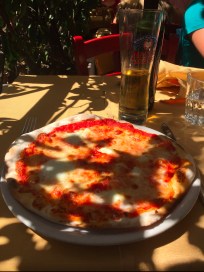
As a food lover, getting to spend four months in Italy has been nothing short of foodie paradise. I have gone all over the country and in each place I have visited I have discovered an amazing treat that was unlike anything I had ever had of its kind in the United States. From the pizza and sfogliatella in Napoli, to the cannoli in Sicily, from the cacio e pepe in Roma, to the truffles in San Gimignano, from the T-Bone steakes in Firenze to the lemon cake in Sorrento my taste buds have been blanketed by sumptuous flavors in every new place I have visited; I have loved getting to taste so many new things and appreciate the unique opportunity every minute. I know I never would have learned so much about Italian culture if I had not been so immersed in trying new foods and I feel like I have gained a small insight on what the Italian perspective is because of all of the new things I have tried.
In Sicily, I was really informed on the lifestyle by the simplistic yet sophisticated nature of the cuisine. Many of the tastiest bites to find in Sicily are in little stands on the street and they are served by men who look like they definitely had ancestors in the mafia. The street food highlights a pizza that is long and shaped like french bread and has a puffy dough. It is topped with a rustic looking tomato sauce and sprinkled with onions. Another popular street food are fried foods such as potato croquettes and panelle (chick pea flour fritters) which you can eat plain or in a sandwich topped with flaked salt. The sandwich is not a high recommendation if you have a heart condition, however it is delicious nonetheless.
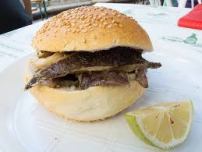
I think the milza, or calf spleen burger is the perfect definition of the people of Palermo. The meat is cooked in a metal pot and stirred every so often, it is a bit chewey, and although the texture is not for everyone, has a history rooted in tradition. The people of Palermo love this sandwich because to them it is more than some cow intestines. It represents their history which hasn’t always been rich and signifies their thousands of years of ancestors that came before them and ate the same thing. Sicilians are very proud of where they came from and I could taste it in every morsel of their cuisine.
The Florentine people are just as tied to their food; however, their cuisine speaks volumes about the banking history that had been rooted in Tuscany for hundreds of years. In Firenze, the most popular dishes are massive T-bone steaks grilled simply with heavy seasoning and cooked medium rare, tripe which is served in a stew or sliced very thinly, and papperdelle served with a ragut of goose or rabbit. 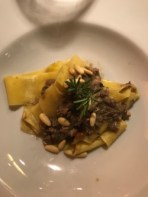 In Firenze, the style of buildings are even reflected in the food. They are simplistic and straight forward and have a relatively subdued color palette. Yet, they are sophisticated and dignified by the detailed trimming and exposed beams. Both the buildings and the food alike are rooted in a tradition of affluence, comfort, and straightforwardness that the Medici family would be proud of today if they were still around.
Then, there is Roman cuisine. Rome is a city with an extremely rich history. Considering it was at one time the ruler of the entire Mediterranean, it is of no surprise that it highlights a great deal of classical Italian dishes. However, considering in modern times Rome is a bustling metropolis these more modern touches can be found in the cuisine as well. 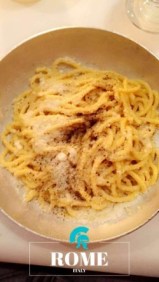
The two most signature dishes of Rome are the pasta dishes cacio e pepe and amatriciana. They are rustic and simple, with only three or four ingredients in each. Cacio e pepe is usually served with bucatelli, a thicker spaghetti, and the sauce is sheep’s cheese, a little milk or cream, and freshly milled black peper. Pasta amatriciana is a tomato sauce with crispy prosciutto. They are both very simple dishes and speak to the more humble beginnings of the city and reveals that many of the people who dwell here are traditionalists with a pure love of Italian history.
Then, there are more contemporary eateries in Rome with more cutting edge dishes. At one restaurant I went to I had a braised pork neck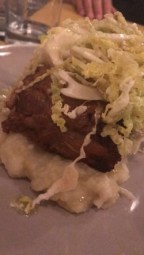 with a cabbage slaw and potato puree that was to die for. Another restaurant I sampled a house made gnochetti with a broccoli pesto that were unlike I any other meal I had tasted, but was completely inspired nonetheless.
Another huge aspect of Rome that is displayed by the cuisine is the element of tourism. Rome is a tourist haven and people come all over the world to view the colloseum, so it is only natural that there are many restaurants that cater to tourists and feature tourism menus and unItalian dishes like spaghetti and meatballs and chicken parmesean (f you see these items on the menu, turn around immediately). While these restaurants are never the best, they are easy to get sucked into and reveal another level of the cities culture.
No matter where you travel in Italy or around the world for that matter, the food is sure to reveal more to you than you could ever imagine. Sometimes, a plate of pasta is more than just flour and egg noodles covered in sauce, sometimes it informs you of a unique lifestyle that you are lucky to have insight to.

 Conosco I Miei Polli